Wednesday, August 10, 2016

Tuesday, August 9, 2016
DekoRRa Model 111 Fake Rock Cover For Septics
Chances are if you’re looking to buy a Dekorra Model 111 Rock Enclosure you probably have a septic tank riser on your mind, and your sick and tired of having it there! It’s ugly, right? Maybe green plastic or concrete? And I bet it’s right out in the yard in a spot where it’s really, really annoying, yes?
 This decorative septic cover rock was designed specifically to smother septic caps and render them all but invisible. It features a wide, low to the ground profile with plenty of interior room for larger diameter sewer tanks. Plus on one side there’s a small extension to suit a junction box should the tank being covered be equipped with one. Not all versions have a junction box. Usually newer septics have them, the green lid types. Concrete lids tend not to be fitted with these external electrical boxes.
So what’s the nitty gritty on how to buy a DekoRRa Model 111 Mock Rock Cover? Here’s 3 quick tips:
Don’t shoot from the hip! We’re not talking OK Corral here. We’re talking measurements. If you guess or estimate or guesstimate the height and diameter of the tank in question there’s a good chance you’ll whiff. If you whiff and the rock ends up being too small, it won’t fit. Then you’ll have to return it, and we all know how much fun dealing with product returns is. So be smart and save yourself some misery: Measure the height and diameter of the tank carefully! (see video below for more info or go to RocksFast.com for fast sizing help)
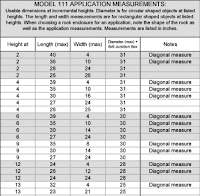
Chart You’re next move! The interior dimension charts are your friend. Use them to determine how much interior space the 111 can handle at any given height! Ignore the exterior dimensions of the stone. Those are useless in determining how large of an object can be covered. (see video below for more info)
To vent or not to vent? If the septic tank in your crosshairs is vented, it’s like that for a reason. You want to be sure any type of decorative cover placed over it is also vented. Luckily some vendors sell these with vents pre-installed. (see video below for more info)
As decorative septic covers go, the 111 is a tough one to beat. The texturing on the exterior walls is fantastic. Looking at it from afar or up close you’ll be amazed that it’s a molded polymer shell and not a real slab of granite or sandstone. Which brings us to another thing: Color selections. You have 4 to choose from: Fieldstone (FS-111), Riverbed (RB-111), Sandstone (SS-111), and Autumn Bluff (AB-111). These colorants are not sprayed or painted on, instead they are incorporated into the molds themselves. This results in an ultra durable finish that will not chip or flake. These things laugh at string trimmers, and they are so loaded with U.V. inhibitors the sun doesn’t fade or delaminate them no matter how hard it trys.
So if you’re looking to hide your septic quickly and easily, this could be your ticket. Especially if the application requires space for a junction box which is a small square electrical box mounted on one side. If the application does not have one of these junction boxes, then you might also consider the Model 112 at Rocksfast.com.
Dimensions: 34″L × 32″W × 15″H
Common Uses
Septic Lid – 25″ diameter up to 13″H
Septic Lid – 30″ diameter up to 9″H
DekoRRa Model 112 Decorative Septic Cover

So what’s the nitty gritty on how to buy a DekoRRa Model 111 Mock Rock Cover? Here’s 3 quick tips:
Don’t shoot from the hip! We’re not talking OK Corral here. We’re talking measurements. If you guess or estimate or guesstimate the height and diameter of the tank in question there’s a good chance you’ll whiff. If you whiff and the rock ends up being too small, it won’t fit. Then you’ll have to return it, and we all know how much fun dealing with product returns is. So be smart and save yourself some misery: Measure the height and diameter of the tank carefully! (see video below for more info or go to RocksFast.com for fast sizing help)
Chart You’re next move! The interior dimension charts are your friend. Use them to determine how much interior space the 111 can handle at any given height! Ignore the exterior dimensions of the stone. Those are useless in determining how large of an object can be covered. (see video below for more info)
To vent or not to vent? If the septic tank in your crosshairs is vented, it’s like that for a reason. You want to be sure any type of decorative cover placed over it is also vented. Luckily some vendors sell these with vents pre-installed. (see video below for more info)
As decorative septic covers go, the 111 is a tough one to beat. The texturing on the exterior walls is fantastic. Looking at it from afar or up close you’ll be amazed that it’s a molded polymer shell and not a real slab of granite or sandstone. Which brings us to another thing: Color selections. You have 4 to choose from: Fieldstone (FS-111), Riverbed (RB-111), Sandstone (SS-111), and Autumn Bluff (AB-111). These colorants are not sprayed or painted on, instead they are incorporated into the molds themselves. This results in an ultra durable finish that will not chip or flake. These things laugh at string trimmers, and they are so loaded with U.V. inhibitors the sun doesn’t fade or delaminate them no matter how hard it trys.
So if you’re looking to hide your septic quickly and easily, this could be your ticket. Especially if the application requires space for a junction box which is a small square electrical box mounted on one side. If the application does not have one of these junction boxes, then you might also consider the Model 112 at Rocksfast.com.
Dimensions: 34″L × 32″W × 15″H
Common Uses
Septic Lid – 25″ diameter up to 13″H
Septic Lid – 30″ diameter up to 9″H
DekoRRa Model 112 Decorative Septic Cover
Tuesday, March 10, 2015
A Quick Fix For Saggy Rock Walls
If your block or stone landscaping wall is starting to fall apart or sag, the key to a quick fix may be reinforcing the ground and between the pavers and rocks.
Reinforcements might be needed depending on a number of factors, soil conditions, type of material being used to build the wall, and the height of the wall. The most common and best type of reinforcement for modular block retaining walls and rock retaining walls is geogrid. Geogrid is a mesh-like fabric that lays between the wall blocks and ties back into the soil which helps stabilize the soil and secure the wall. It is usually added every 2 or 3 courses. The more clay you have in your soil, which we have a lot of in Camas and around the Vancouver area will need more shaker gravel. Soils that drain like sandy ones won't need as much.
Reinforcements might be needed depending on a number of factors, soil conditions, type of material being used to build the wall, and the height of the wall. The most common and best type of reinforcement for modular block retaining walls and rock retaining walls is geogrid. Geogrid is a mesh-like fabric that lays between the wall blocks and ties back into the soil which helps stabilize the soil and secure the wall. It is usually added every 2 or 3 courses. The more clay you have in your soil, which we have a lot of in Camas and around the Vancouver area will need more shaker gravel. Soils that drain like sandy ones won't need as much.
DIY Rock Retaining Wall Project 2015
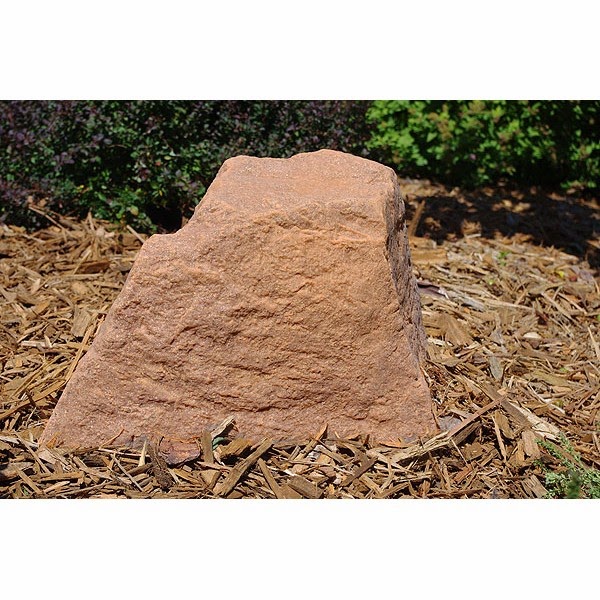
Retaining walls are beautiful landscape structures that are built to restrain the earth behind them. They need to hold up to constant pressure as the force of gravity pushes against them. Badly built walls will fail. Failed walls will sag, crack, bulge, lean, produce large gaps, or collapse. Most of the time, the only way to fix a collapsing retaining wall is to tear it down and rebuild it.
Re-shape aging stone walls. - After 10-15 years many rock retaining walls tend to develop sink spots where the wall has loosened. Check up on all of your rock retaining walls and reshape them to make your landscaping look like new.
You can also add a paved pathway for easy access up your steep hill. This will help in preventing erosion and give a simple way up and down your hill. You might, however, prefer a curved pathway, both for a more natural look and for easier transport of items.
The great thing I love about using fake rocks to landscape yards is that they require little to no maintenance once you lay them down. They are totally self sufficient once added to your front yard.Landscaping boulders come in all shapes and sizes from giant boulders to small gravel and can really add depth and character to your home. Many homes in places where they is not water use rocks in their homes in place of grass.
Wood shredders create mulch which can be used in gardens or around the base of trees and shrubs for a landscape rocks. If consider purchasing a wood chipper you would need to consider what you are using it for. Small wood chippers cost around $750 and larger ones retail at about $1500. When you compare these machines to commercial machines they are totally affordable. Industrial versions of wood shredders cost around $20,000.
With a little bit of planning and discussion, we were able to pick up the materials at a local hardware store. The materials consisted of 40-50 bags of colored pea gravel (much easier on the eye than gray gravel) and 35 or so prefab colored flag stone pavers. Over the course of three days, I was on "vacation" mind you, we laid and tamped down the gravel and set the pavers in the gravel. The end result was an additional 100 sq. feet of usable living space that requires no maintenance or expense.
Subscribe to:
Posts (Atom)